
What Size Rug Do I Need? The Complete Rug Size and Layout Guide for Every Room
In all the years of interior design, I’ve always placed high importance on rug selection, as it can make or break a space. Understanding how a rug should fit and how the furniture should float on top of it is crucial. Choosing the right rug size can completely change the way a room feels. The right rug makes a space feel grounded, intentional, and pulled together. The wrong rug can make even a beautifully designed room feel awkward, unfinished, or smaller than it really is.
If you have ever wondered what size rug you need for your living room, bedroom, dining room, entryway, or office, you are not alone. Rug sizing is one of the most common design mistakes homeowners make, and it is usually because the rug is too small.
I created this complete rug size guide so you can easily find the rug sizes and rug layouts for every room. Enjoy!
How to Use This Rug Size and Layout Guide
I tried to make it as easy as possible. This guide is organized by room so you can quickly find the area you are working on and compare the best rug options at a glance. Each section includes recommended rug sizes, the best placement options for that space, common mistakes to avoid, and visual layout examples to make the decision easier.
Living Room Rug Sizes and Layout
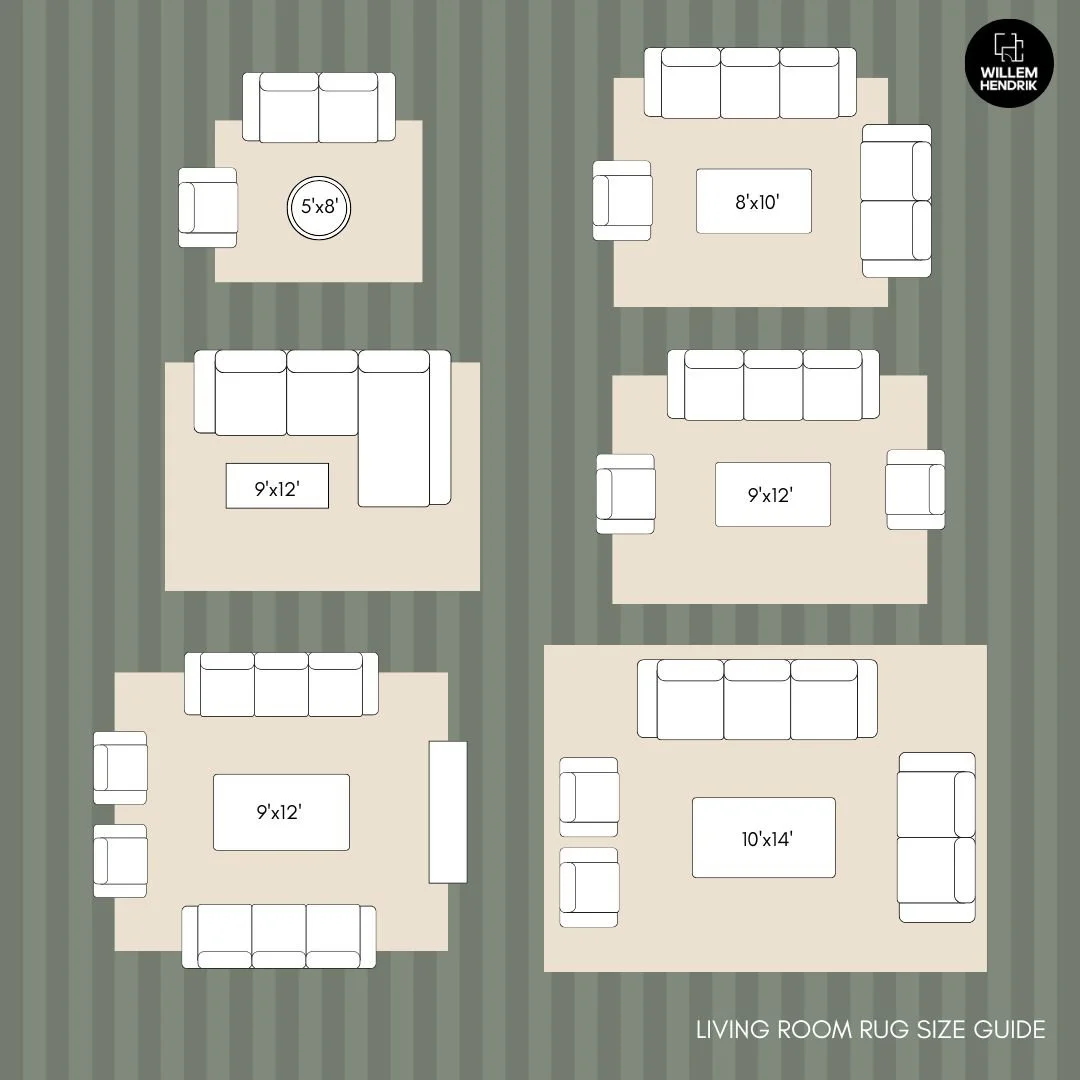
A living room rug should do more than fill empty floor space. It should anchor the seating, relate to the furniture correctly, and make the whole room feel more grounded. Below, you’ll see the most common living room rug sizes and layout options, with visuals to help you compare what works best. Never float a tiny rug in the middle of a living room under a coffee table. The rug is the anchor, not a centerpiece to the room. Only float a centerpiece if it’s a second rug or hide.
Dining Room Rug Sizes and Layout
Some clients hate a rug under a dining table for obvious reasons; however, rugs have come a long way, and you can get stain-resistant, washable options. Now, don’t be crazy and put a white or light rug under a dining space unless you have no pets, no kids, and never actually entertain. A dining space rug needs to feel centered under the table while still allowing the chairs to sit comfortably when pulled out. The layouts below show the most practical and well-proportioned options.

Bedroom Rug Sizes and Layout
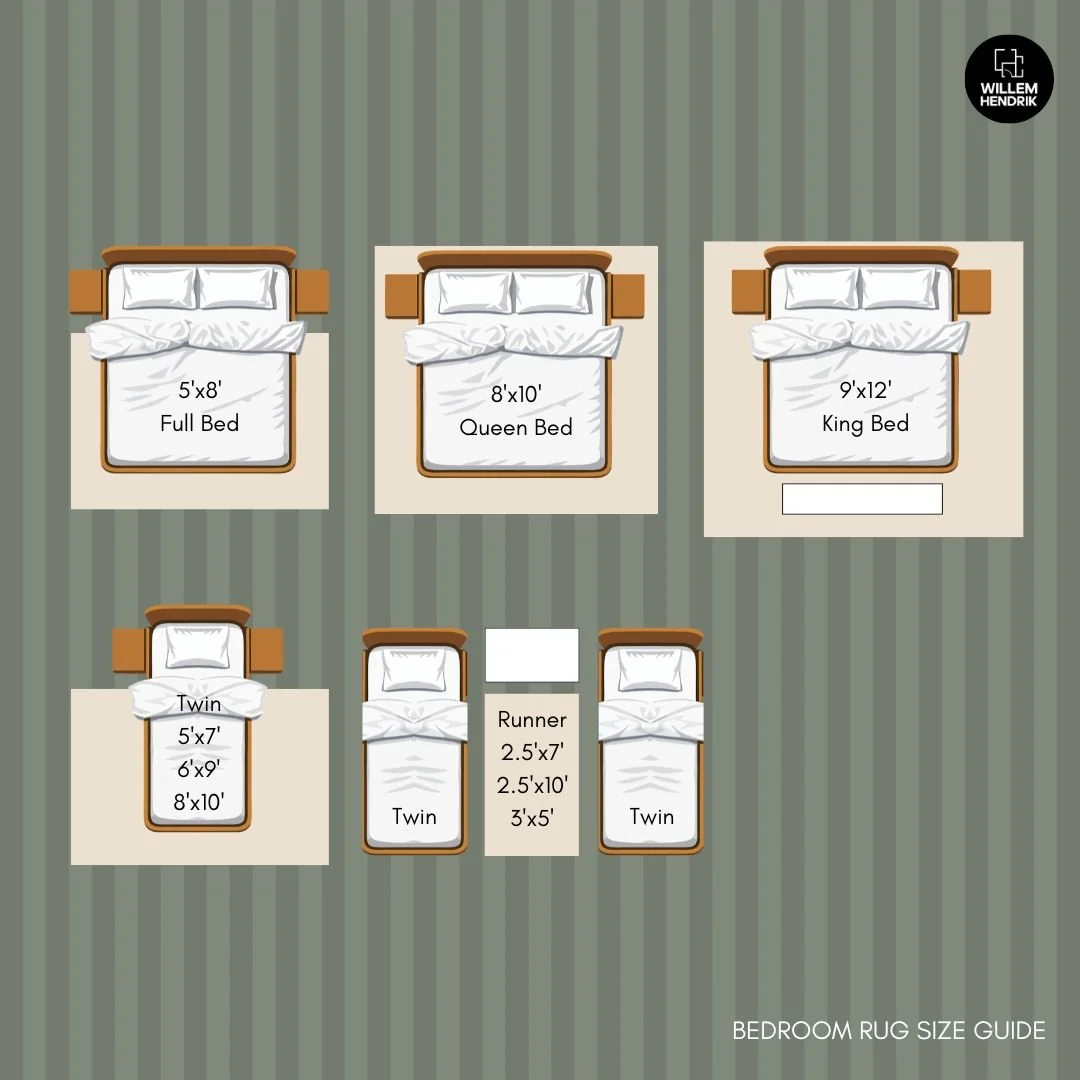
Who doesn’t like climbing out of bed with toes touching a warm rug? A bedroom rug should make the room feel softer, warmer, and more finished. The right size helps frame the bed beautifully and adds balance to the space, while the wrong one can feel too small or misplaced. Below are the most effective bedroom rug layouts, shown visually for easy comparison.
Bathroom Rug Sizes and Layout
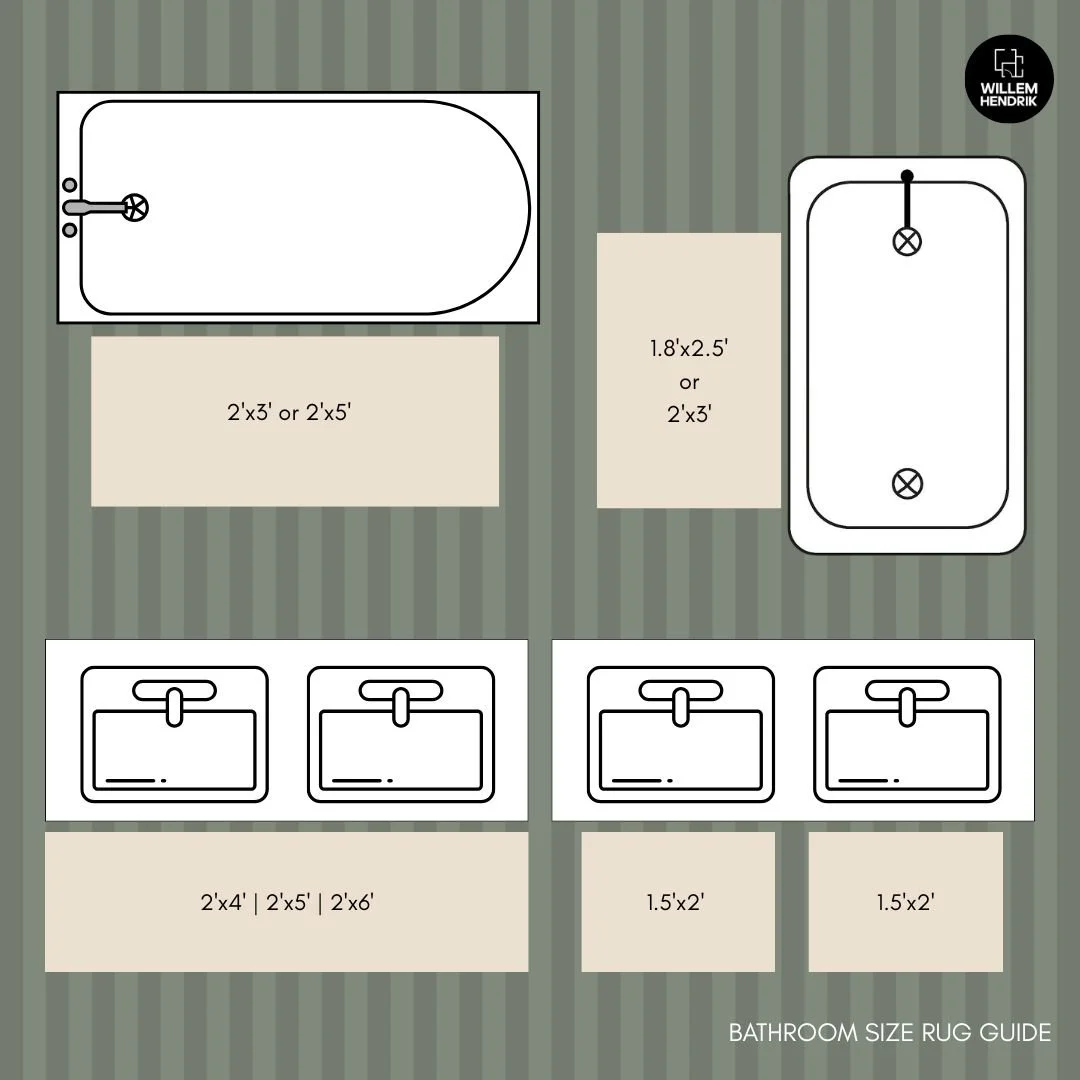
Bathroom rugs may be smaller, but placement still matters. The right rug can soften the room, add comfort where you need it most, and make the space feel more considered overall. Some clients like a spa feel with no rug, and others keep a small rug only in front of the shower. Below are a few of the most useful bathroom rug layouts, depending on the size and setup of the room.
Kitchen Rug Sizes and Layout
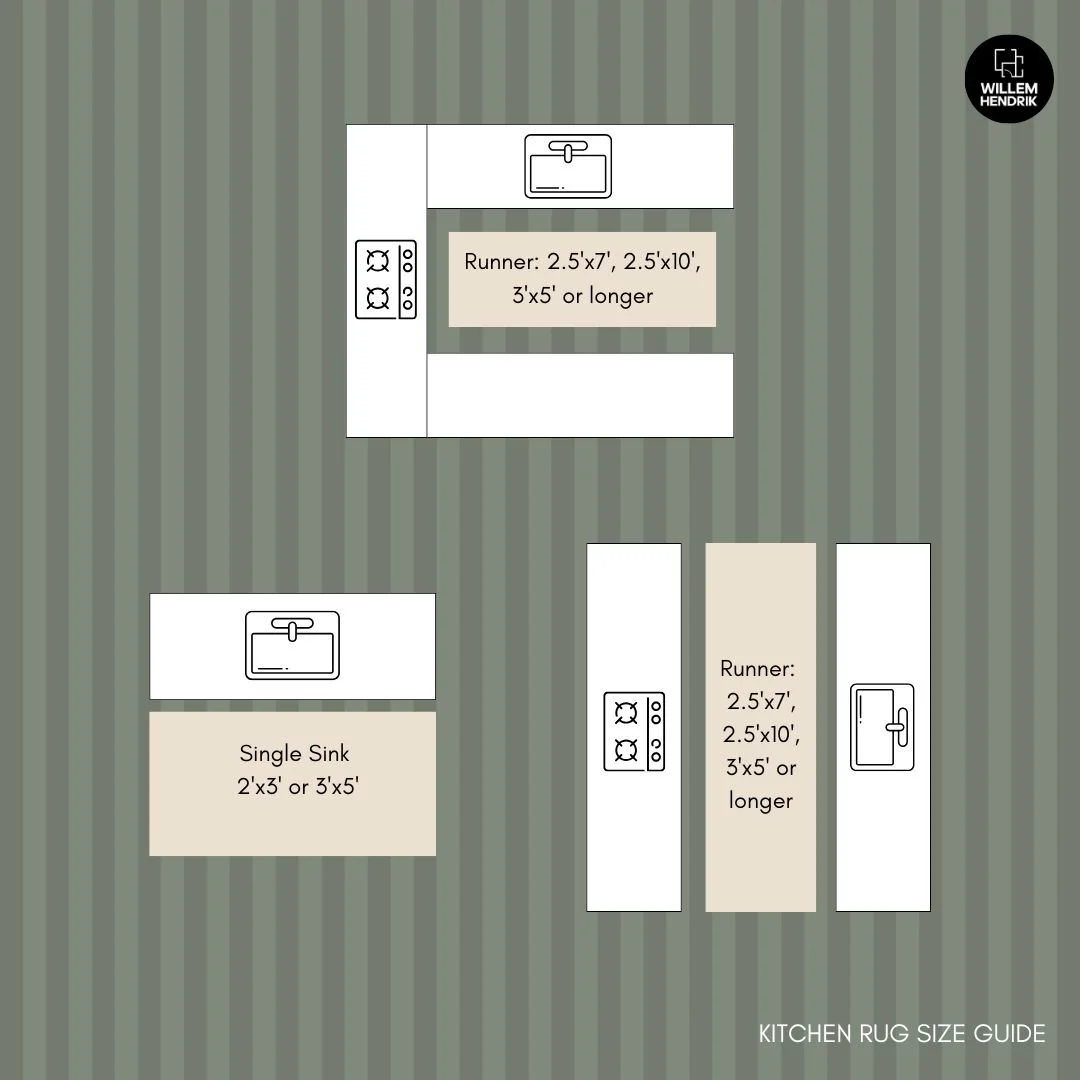
In a kitchen, a rug should feel intentional, not in the way. Whether you’re placing one at the sink, along an island, or in a galley layout, scale and position make all the difference. The examples below show the most common kitchen rug placements and the sizes that tend to work best.
Entryway Rug Sizes and Layout
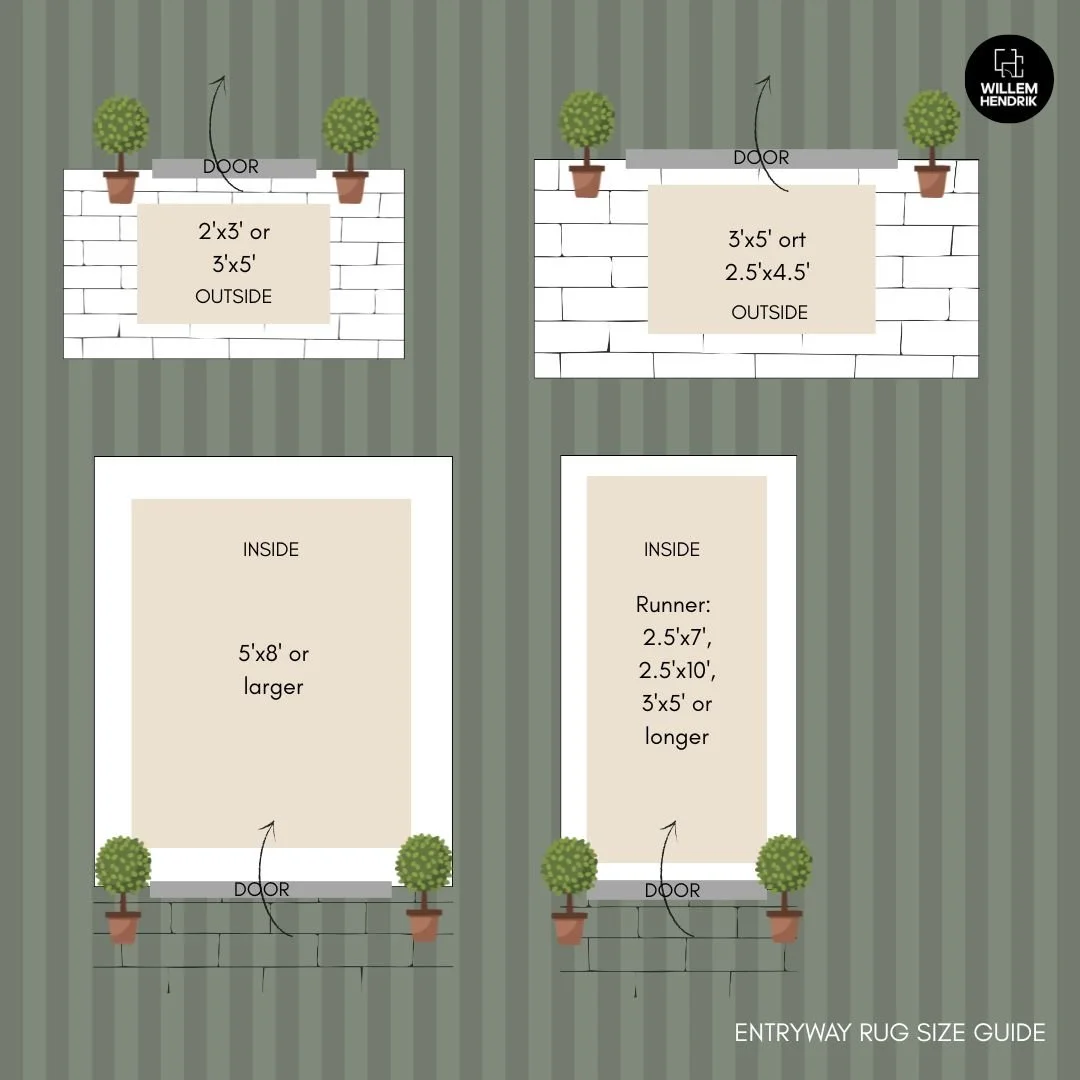
An entryway rug is one of the first things a person sees when they walk into a home, so it should feel both welcoming and well scaled. Whether your entryway is compact or more open, the right rug can help define the space right away. Never place an odd-size rug in an entryway if it does not fit the scale of the space. A tiny little rug right smack in front of the door in a large entryway looks off balance, so choose a size that centers the area and leaves a framed effect around the rug. Below are a few of the most effective entryway rug layouts to consider.
Most Popular Rug Sizes and Where They Work Best
Below are the most common rug sizes and where they typically work best.
5' x 8' — Best for smaller living rooms with a loveseat and armchair, under a full bed, or in smaller entry spaces.
6' x 9' — A good fit for compact dining areas, some twin bedroom layouts, and smaller rooms where an 8' x 10' would feel too large.
7' Round — Works best under smaller round dining tables.
8' Round — A strong choice for round dining tables when you want a little more space around the chairs.
8' x 10' — One of the most versatile rug sizes. Works well in many living rooms, under queen beds, and beneath smaller dining tables.
9' x 12' — Ideal for larger living rooms, sectional layouts, king beds, and more generously sized dining rooms.
10' x 14' — Best for larger living and dining spaces where the rug needs to fully anchor the furniture layout.
2' x 3' — Best for small bathrooms, in front of tubs, or at exterior doors.
2' x 5' — A practical size for double vanities and longer bathroom layouts.
2' x 4' — Works well in front of wider bathroom vanities when a standard bath mat feels too small.
1.5' x 2' — Best as a small bath mat in front of a single sink or paired in a double vanity setup.
1.8' x 2.5' — A useful size beside a bathtub or in tighter bathroom spaces.
2.5' x 4.5' — A good option outside an entry door when you want more width than a standard doormat.
3' x 5' — A flexible size for entryways, smaller kitchens, bathrooms, and utility spaces.
2.5' x 7' — A great runner size for kitchens, narrow entry halls, and alongside beds.
2.5' x 10' — Best for longer kitchens, hallways, and larger entry spaces.
Longer runners — Ideal for galley kitchens, long entry halls, and interior walkways where a standard runner would feel too short.
Choosing the Right Rug for Your Lifestyle
The right rug should fit your lifestyle just as much as your space. In high-traffic areas like living rooms, entryways, kitchens, and hallways, look for rugs that are durable, stain resistant, and easy to clean. Low-pile and washable rugs are often the best choice in these spaces because they hold up better to daily wear.
In bedrooms and lower-traffic rooms, you can lean into comfort a bit more. A higher-pile rug can add warmth, softness, and a more luxurious feel underfoot, especially in spaces meant to feel calm and relaxed.
If you have kids or pets, practicality matters even more. Choose a rug that can handle wear, clean up easily, and hide everyday messes well. Very light rugs tend to show dirt quickly, while very dark rugs can make pet hair stand out. The best rug is one that looks beautiful, wears well, and works for the way your family actually lives.
Do not overlook the rug pad. The right rug pad helps keep the rug in place, adds comfort underfoot, protects your flooring, and can extend the life of the rug over time.